
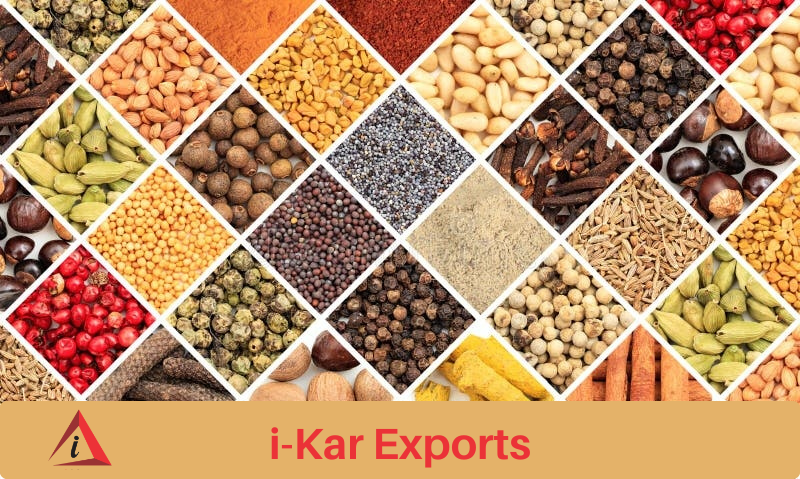
Importing spices, pulses, and grains from India involves more than just finding a good supplier — it means understanding certifications, documentation, shipping terms, and quality standards that govern the trade. This guide covers the real mechanics of importing from India, so you know what to check for and what questions to ask any exporter, including a supplier like i-Kar Exports.
The Regulatory Bodies That Matter
India’s spice and agri-export trade is overseen by a few key organizations, and knowing them helps you evaluate any exporter’s credibility:
- Spices Board India — a statutory body under the Ministry of Commerce that registers spice exporters (via an Exporter Certificate/RCMC) and promotes quality standards for spice exports.
- APEDA (Agricultural and Processed Food Products Export Development Authority) — regulates and promotes export of agricultural products, including grains, pulses, and processed foods.
- FSSAI (Food Safety and Standards Authority of India) — sets food safety licensing requirements that food exporters must hold domestically.
- Plant Quarantine authorities — issue the Phytosanitary Certificate, required by most importing countries to confirm produce is free from pests and plant diseases.
When evaluating any exporter, ask directly for their Spices Board RCMC number, APEDA registration, and FSSAI license number — legitimate exporters share these without hesitation.
Core Documents You’ll Receive on a Legitimate Shipment
- Commercial Invoice & Packing List — details of goods, quantity, and value
- Certificate of Origin — confirms the goods originate from India (often needed for preferential tariff treatment)
- Phytosanitary Certificate — mandatory for most spice, pulse, and grain shipments
- Fumigation Certificate — confirms treatment against pests, especially for grain and pulse cargo
- Lab Test Report — covering moisture content, pesticide residue, aflatoxin levels (critical for chilli and groundnut-based products), and microbial safety
- Bill of Lading / Airway Bill — the shipping document issued by the carrier
- Certificate of Analysis (CoA) — quality parameters specific to the product batch
If an exporter can’t produce these on request, that’s a red flag — regardless of how polished their marketing is.
Understanding Shipping Terms (Incoterms)
Most India-origin bulk spice and grain deals use one of these Incoterms:
- FOB (Free on Board) — the exporter’s responsibility ends once goods are loaded onto the vessel at the Indian port; the buyer arranges and pays for onward shipping and insurance.
- CFR (Cost and Freight) — the exporter pays for shipping to the destination port, but the buyer arranges insurance.
- CIF (Cost, Insurance, Freight) — the exporter covers shipping and insurance to the destination port.
Knowing which term you’re quoted matters — a lower “price per kg” under FOB terms isn’t directly comparable to a CIF price, since freight and insurance costs aren’t included.
Common HS Codes for Reference
When clearing customs, spices and grains fall under specific Harmonized System (HS) codes, which vary by exact product form (whole, ground, or processed):
- Chilli (dried) — HS Code 0904
- Turmeric — HS Code 0910 30
- Ginger — HS Code 0910 11 / 0910 12
- Cumin, coriander, fennel — HS Code 0909
- Rice — HS Code 1006
- Pulses (lentils, chickpeas, etc.) — HS Code 0713
Buyers should confirm the exact HS code with their exporter and their own customs broker, since import duty and documentation requirements can shift based on classification.
Quality Red Flags to Watch For
- No willingness to share third-party lab test reports (not just internal ones)
- Vague answers about farm or processing location
- No Spices Board or APEDA registration number available
- Unusually low pricing with no clear explanation (often a sign of adulteration, poor grading, or non-export-grade stock)
- No sample-before-bulk-order process offered
A transparent exporter will walk you through certifications, sourcing regions, and lab results before you commit to a large order — this is standard practice with established exporters like i-Kar Exports, which sources from Rajasthan and Guntur and provides documentation upfront.
A Practical Import Checklist
- Request product specification sheet and sample
- Verify exporter registration (Spices Board / APEDA / FSSAI)
- Confirm lab test parameters relevant to your country’s import rules (e.g., aflatoxin limits for the EU, pesticide MRLs for the UK)
- Agree on Incoterms and get a clear cost breakdown
- Confirm packaging format matches your market (retail-ready vs. bulk)
- Review all shipping documents before final payment release
- Cross-check the Certificate of Origin and Phytosanitary Certificate against the actual shipment
Where i-Kar Exports Fits In
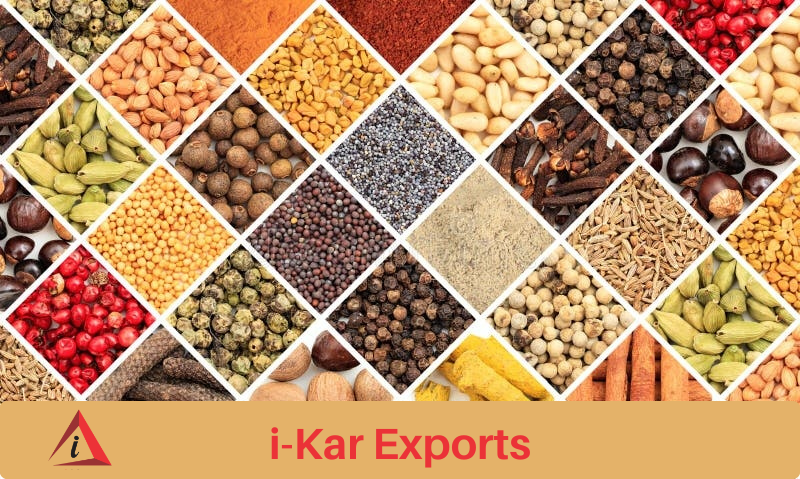
i-Kar Exports operates in this same regulatory framework — sourcing red chilli, turmeric, ginger, garlic, onion, pulses, and grains from Rajasthan and Guntur, with offices across Jaipur, Guntur, Karnataka, Chennai, and Mumbai. If you’re evaluating them (or any exporter), the checklist above is exactly what to ask for: registration numbers, lab reports, and sample shipments before committing to bulk orders.
📩 Email: support@shalasetu.com 📱 WhatsApp: +91-9988469468 🌐 Website: http://ikarexports.com
FAQ
Q1. What’s the difference between FOB and CIF pricing? FOB means the buyer arranges and pays for shipping from the Indian port onward; CIF means the exporter includes shipping and insurance in the price to your destination port.
Q2. Is a Phytosanitary Certificate always required? For most raw spices, grains, and pulses, yes — it’s a standard requirement in nearly every importing country’s customs process.
Q3. How do I verify an exporter is legitimate? Ask for their Spices Board RCMC number, APEDA registration, and FSSAI license, and request third-party lab test reports rather than relying on marketing claims alone.
Q4. What lab tests matter most for chilli and turmeric imports? Aflatoxin levels (especially for chilli), pesticide residue, moisture content, and curcumin content (for turmeric) are the key parameters most import markets check.
This guide reflects general Indian agri-export practices and documentation standards. Requirements can vary by destination country, so always confirm specifics with your customs broker before finalizing an import order.
Importing Spices & Grains from India: What Buyers Actually Need to Know
Importing spices, pulses, and grains from India involves more than just finding a good supplier — it means understanding certifications, documentation, shipping terms, and quality standards that govern the trade. This guide covers the real mechanics of importing from India, so you know what to check for and what questions to ask any exporter, including a supplier like i-Kar Exports.
The Regulatory Bodies That Matter
India’s spice and agri-export trade is overseen by a few key organizations, and knowing them helps you evaluate any exporter’s credibility:
- Spices Board India — a statutory body under the Ministry of Commerce that registers spice exporters (via an Exporter Certificate/RCMC) and promotes quality standards for spice exports.
- APEDA (Agricultural and Processed Food Products Export Development Authority) — regulates and promotes export of agricultural products, including grains, pulses, and processed foods.
- FSSAI (Food Safety and Standards Authority of India) — sets food safety licensing requirements that food exporters must hold domestically.
- Plant Quarantine authorities — issue the Phytosanitary Certificate, required by most importing countries to confirm produce is free from pests and plant diseases.
When evaluating any exporter, ask directly for their Spices Board RCMC number, APEDA registration, and FSSAI license number — legitimate exporters share these without hesitation.
Core Documents You’ll Receive on a Legitimate Shipment
- Commercial Invoice & Packing List — details of goods, quantity, and value
- Certificate of Origin — confirms the goods originate from India (often needed for preferential tariff treatment)
- Phytosanitary Certificate — mandatory for most spice, pulse, and grain shipments
- Fumigation Certificate — confirms treatment against pests, especially for grain and pulse cargo
- Lab Test Report — covering moisture content, pesticide residue, aflatoxin levels (critical for chilli and groundnut-based products), and microbial safety
- Bill of Lading / Airway Bill — the shipping document issued by the carrier
- Certificate of Analysis (CoA) — quality parameters specific to the product batch
If an exporter can’t produce these on request, that’s a red flag — regardless of how polished their marketing is.
Understanding Shipping Terms (Incoterms)
Most India-origin bulk spice and grain deals use one of these Incoterms:
- FOB (Free on Board) — the exporter’s responsibility ends once goods are loaded onto the vessel at the Indian port; the buyer arranges and pays for onward shipping and insurance.
- CFR (Cost and Freight) — the exporter pays for shipping to the destination port, but the buyer arranges insurance.
- CIF (Cost, Insurance, Freight) — the exporter covers shipping and insurance to the destination port.
Knowing which term you’re quoted matters — a lower “price per kg” under FOB terms isn’t directly comparable to a CIF price, since freight and insurance costs aren’t included.
Common HS Codes for Reference
When clearing customs, spices and grains fall under specific Harmonized System (HS) codes, which vary by exact product form (whole, ground, or processed):
- Chilli (dried) — HS Code 0904
- Turmeric — HS Code 0910 30
- Ginger — HS Code 0910 11 / 0910 12
- Cumin, coriander, fennel — HS Code 0909
- Rice — HS Code 1006
- Pulses (lentils, chickpeas, etc.) — HS Code 0713
Buyers should confirm the exact HS code with their exporter and their own customs broker, since import duty and documentation requirements can shift based on classification.
Quality Red Flags to Watch For
- No willingness to share third-party lab test reports (not just internal ones)
- Vague answers about farm or processing location
- No Spices Board or APEDA registration number available
- Unusually low pricing with no clear explanation (often a sign of adulteration, poor grading, or non-export-grade stock)
- No sample-before-bulk-order process offered
A transparent exporter will walk you through certifications, sourcing regions, and lab results before you commit to a large order — this is standard practice with established exporters like i-Kar Exports, which sources from Rajasthan and Guntur and provides documentation upfront.
A Practical Import Checklist
- Request product specification sheet and sample
- Verify exporter registration (Spices Board / APEDA / FSSAI)
- Confirm lab test parameters relevant to your country’s import rules (e.g., aflatoxin limits for the EU, pesticide MRLs for the UK)
- Agree on Incoterms and get a clear cost breakdown
- Confirm packaging format matches your market (retail-ready vs. bulk)
- Review all shipping documents before final payment release
- Cross-check the Certificate of Origin and Phytosanitary Certificate against the actual shipment
Where i-Kar Exports Fits In
i-Kar Exports operates in this same regulatory framework — sourcing red chilli, turmeric, ginger, garlic, onion, pulses, and grains from Rajasthan and Guntur, with offices across Jaipur, Guntur, Karnataka, Chennai, and Mumbai. If you’re evaluating them (or any exporter), the checklist above is exactly what to ask for: registration numbers, lab reports, and sample shipments before committing to bulk orders.
📩 Email: support@shalasetu.com 📱 WhatsApp: +91-9988469468 🌐 Website: http://ikarexports.com
FAQ
Q1. What’s the difference between FOB and CIF pricing? FOB means the buyer arranges and pays for shipping from the Indian port onward; CIF means the exporter includes shipping and insurance in the price to your destination port.
Q2. Is a Phytosanitary Certificate always required? For most raw spices, grains, and pulses, yes — it’s a standard requirement in nearly every importing country’s customs process.
Q3. How do I verify an exporter is legitimate? Ask for their Spices Board RCMC number, APEDA registration, and FSSAI license, and request third-party lab test reports rather than relying on marketing claims alone.
Q4. What lab tests matter most for chilli and turmeric imports? Aflatoxin levels (especially for chilli), pesticide residue, moisture content, and curcumin content (for turmeric) are the key parameters most import markets check.
This guide reflects general Indian agri-export practices and documentation standards. Requirements can vary by destination country, so always confirm specifics with your customs broker before finalizing an import order.