
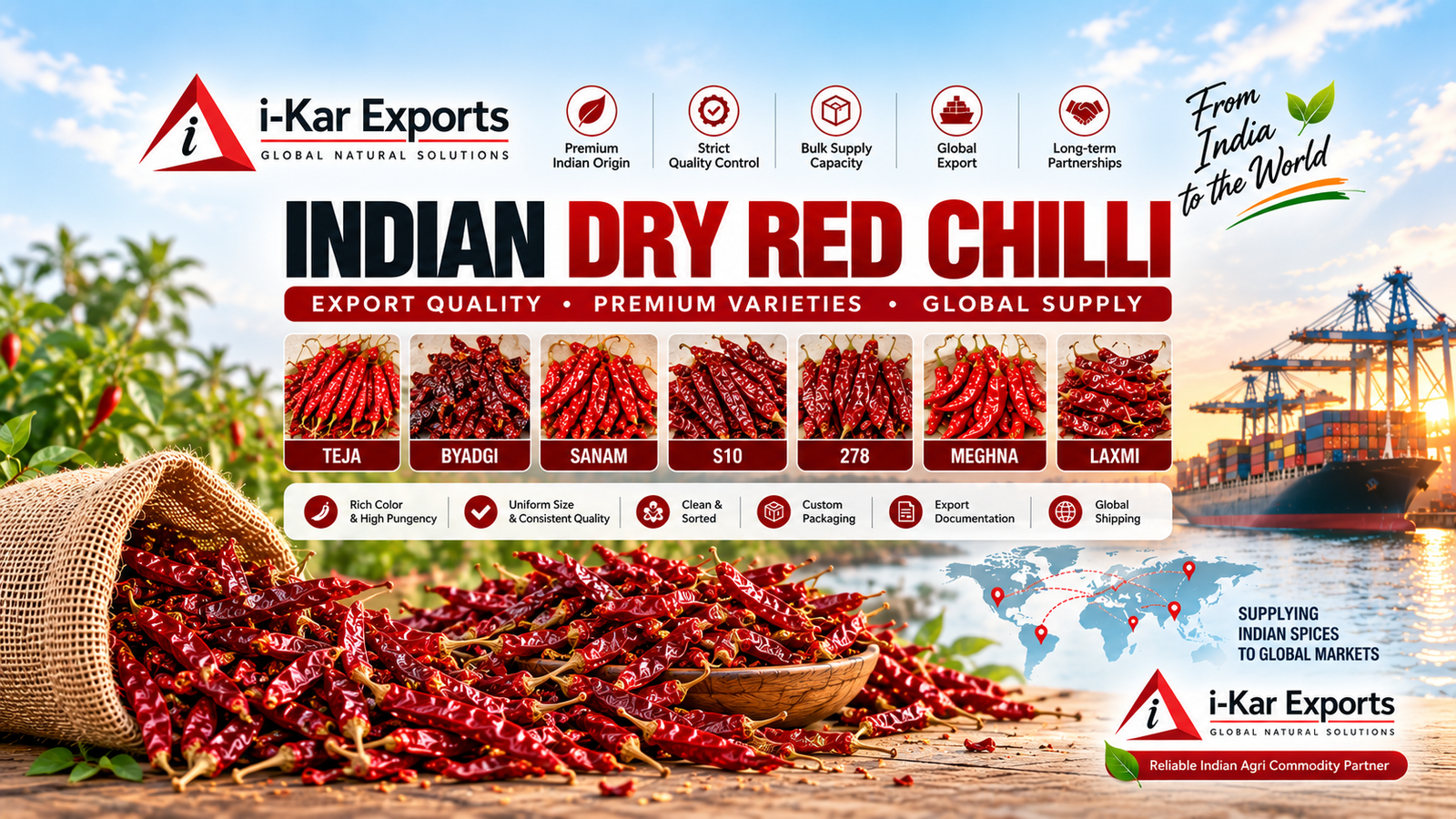
Buying 20 or 25 tonnes of Indian dry red chilli is not the end of the business.
It is actually the beginning.
The real challenge starts when the container reaches your warehouse.
A buyer may purchase excellent quality Teja, Guntur Sannam, Byadgi or other Indian dry red chilli, but poor storage can quickly reduce colour, aroma and overall quality.
Moisture, condensation, insects, mould and contamination are some of the biggest risks faced by businesses storing chilli in bulk.
The good news is that most of these risks can be controlled with the right system.
Why Proper Chilli Storage Matters
Dry red chilli is a natural agricultural product. Even after drying, it can be affected by environmental conditions.
The FAO and WHO Codex Alimentarius identifies temperature, humidity and moisture as important factors in mould growth in stored spices.
For a commercial importer, poor storage can result in:
- Loss of colour
- Loss of pungency
- Mould growth
- Insect infestation
- Bad odour
- Product rejection
- Financial losses
- Customer complaints
- Difficulty meeting food safety requirements
This is why storage should be treated as part of the chilli supply chain, not as an afterthought.
The Biggest Enemy – Moisture
Moisture is one of the biggest risks for stored dry chilli.
When chilli absorbs moisture, the product can become vulnerable to mould growth and quality deterioration.
The Spices Board of India recommends proper drying and states that safe moisture levels are important for maintaining the quality of dried chilli.
Codex guidance also recommends storing spices in clean, dry and well-ventilated conditions and protecting them from moisture.
For a commercial warehouse, this means:
- Keep the warehouse dry
- Prevent roof and wall leakage
- Avoid water entering the storage area
- Monitor humidity
- Keep bags away from direct contact with the floor
- Maintain air circulation
- Check the cargo regularly
Watch Out for Container Condensation
There is another problem that importers sometimes overlook.
The chilli may leave India in good condition, but condensation can develop inside a shipping container because of temperature differences during transportation.
This can create local wet spots inside the cargo.
That is why proper container selection, dry cargo, suitable packing and careful loading are important.
The Codex guidance for dried chilli specifically highlights protection from moisture during transportation and storage.
Aflatoxin – A Serious Commercial Risk
Aflatoxin is one of the major food safety concerns associated with poorly stored spices.
It is produced by certain moulds and can become a serious issue when conditions favour fungal growth.
The Spices Board of India has specifically highlighted the importance of clean and dry storage and maintaining low moisture to control aflatoxin-related risks.
For an importer, this is not only a food safety issue.
It can also become a commercial issue.
A shipment that fails the buyer country’s applicable food safety requirements can result in:
- Delays
- Additional testing
- Rejection
- Disposal costs
- Customer disputes
- Financial loss
- Damage to the importer’s reputation
This is why testing should be planned before the shipment is accepted, not after a problem appears.
Insects Are Another Hidden Risk
Stored chilli can also attract insects if warehouse conditions are not properly controlled.
Insect activity can damage the product and may contribute to conditions favourable to mould growth.
A commercial storage system should therefore include:
- Regular inspection
- Pest control
- Clean warehouse surroundings
- Properly sealed storage areas
- Regular cleaning
- Monitoring for infestation
Do not wait until insects become visible throughout the warehouse.
Early detection is much cheaper than treating an entire commercial stock.
How Should Imported Chilli Be Stored?
A good commercial storage system should focus on five things:
Dry + Clean + Cool + Ventilated + Pest Controlled
Chilli bags should be stored on pallets or suitable raised platforms rather than directly on the floor.
There should also be sufficient space between the bags and walls to allow inspection and air circulation.
The warehouse should be protected from:
- Rainwater
- Condensation
- Rodents
- Birds
- Insects
- Dust
- Chemicals
- Strong odours
Codex guidance recommends clean, dry storage with suitable ventilation and protection from moisture, insects and rodents.
What Should You Check When the Container Arrives?
This is one of the most important steps for an importer.
Before moving the complete shipment into long-term storage, inspect:
1. Container condition
Check for:
- Water leakage
- Unusual smell
- Damage
- Signs of insects
- Condensation
- Wet areas
2. Packaging
Check whether bags are:
- Wet
- Torn
- Damaged
- Contaminated
- Properly sealed
3. Product condition
Check for:
- Unusual smell
- Visible mould
- Insects
- Excess moisture
- Colour deterioration
- Foreign material
4. Documentation and testing
Keep the relevant commercial and quality documents together with the shipment records.
Depending on the destination and product specification, buyers may require laboratory testing for parameters such as moisture, aflatoxin, pesticide residues and microbiological safety.
The exact requirements depend on the importing country’s regulations and the buyer’s contract.
Storage Is Not Just About Safety – It Is About Profit
Good storage creates a business opportunity.
Imagine an importer purchases chilli during a favourable market period and stores it correctly for future customer orders.
If quality is maintained, the importer may be able to:
- Supply customers throughout the year
- Reduce emergency purchasing
- Maintain consistent product availability
- Serve large customers faster
- Manage seasonal price fluctuations
- Build a reliable distribution business
But this only works when inventory quality is controlled.
Cheap storage can become expensive storage if the product gets damaged.
Strengths of Importing Indian Red Chilli
India offers several advantages to international buyers.
Large Production Base
India has a large chilli-growing ecosystem with multiple producing states.
Variety
Buyers can source products according to their requirements, including:
- Teja S17
- Guntur Sannam
- 334
- Byadgi
- Other commercial varieties
Established Supply Chain
India has established agricultural markets, processors, exporters and logistics networks.
Flexible Specifications
Commercial buyers can generally specify requirements related to colour, pungency, moisture, size, stem condition and packaging.
For buyers looking for Indian Red Chilli Export, working directly with an experienced exporter can simplify the sourcing process.
Opportunities for Chilli Importers
The global chilli business offers opportunities beyond simply buying and selling raw chilli.
An importer can build businesses around:
- Wholesale distribution
- Chilli powder production
- Spice blends
- Hot sauce manufacturing
- Food processing
- Restaurant supply
- Retail packaging
- Oleoresin and colour applications
Demand can also differ significantly between markets.
A buyer who understands varieties and quality specifications can target the right customers instead of competing only on price.
Risks You Should Not Ignore
Every agricultural commodity business has risks.
For chilli importers, the major risks include:
- Quality deterioration during storage
- Moisture absorption
- Mould growth
- Aflatoxin
- Pesticide residue compliance
- Insect infestation
- Container condensation
- Market price fluctuations
- Currency fluctuations
- Changes in import regulations
- Shipment delays
The best way to manage these risks is not to eliminate them completely.
It is to build a system that identifies them early.
Threats in the International Chilli Business
The biggest threats can come from outside the warehouse as well.
Weather can affect Indian production.
Changes in food safety regulations can affect market access.
International freight costs can change.
Currency movements can affect margins.
A sudden change in customer demand can also affect inventory value.
For this reason, professional buyers should avoid depending entirely on one variety, one supplier or one market.
How i-Kar Exports Helps Reduce the Risk
At i-Kar Exports, we understand that an international chilli order is not simply about putting chilli into a container.
The quality journey starts before loading.
For export orders, buyers can discuss requirements related to:
- Chilli variety
- Pungency
- Colour
- Moisture
- Size
- Stem or stemless
- Cleaning
- Packaging
- Quantity
- Destination
- Required quality documentation
i-Kar Exports works with Indian sourcing markets and helps international buyers select products according to their commercial requirements.
Explore our Indian Red Chilli Export range for information about available varieties and export requirements.
What We Take Care Of – And What You Should Take Care Of
At i-Kar Exports, our responsibility is to take care of the export side as much as possible.
We focus on sourcing, product specifications, quality coordination, packing and export logistics according to the agreed requirements.
But once the container reaches the destination, the importer also has an important responsibility.
We take care of the journey to your destination. You take care of the environment after arrival.
That means your warehouse should be:
- Clean
- Dry
- Ventilated
- Pest controlled
- Protected from rain and condensation
- Suitable for food storage
This simple division of responsibility can protect the value of the entire shipment.
The Golden Rule for Bulk Chilli Buyers
Never think:
“The chilli is dry, so it is safe.”
Think:
“The chilli must remain dry, clean and protected throughout the entire supply chain.”
From farm to processing unit, from exporter to container, from port to warehouse and finally to the customer, every step matters.
Final Thoughts
Importing Indian red chilli can be a highly attractive business opportunity, but commercial success depends on more than finding the right price.
The real advantage comes from combining:
Right Variety + Right Quality + Right Supplier + Right Storage + Right Market
India offers international buyers a strong sourcing base for Teja, Guntur Sannam, Byadgi and other dry red chilli varieties.
And when the product is properly sourced, tested, packed, transported and stored, the importer can build a reliable long-term chilli business.
If you are planning to import Indian dry red chilli in bulk, speak with i-Kar Exports about your required variety, quantity, quality specifications, packaging and destination.
i-Kar Exports
Indian Agricultural Products | Spices | Global Export
Website: https://ikarexports.com/